Many owners of smaller businesses hesitate when it comes to online promotion. They worry it’s expensive and complicated and that they won’t see any results. The truth is that well-planned online promotion is one of the most measurable ways to win customers – even on a smaller budget. In this article, you’ll learn what benefits it brings, what the individual channels offer and how to get started without unnecessary waste.
The main benefits of online promotion
- Reach at a reasonable cost – you reach the people you care about without paying for blanket coverage like with flyers or billboards.
- Measurable results – you can see how many people saw your ad, clicked and bought.
- Precise targeting – by location, interests, behavior and what people are searching for right now.
- Long-term value – SEO and content bring in visits even months after you create them.
- Flexibility – you can adjust, pause or scale up a campaign within hours, not weeks.
- A chance for smaller players too – a small business can compete with big ones in search or on social media if it’s more relevant to the customer.
Take a café in a small town. A flyer in mailboxes also reaches people who don’t drink coffee, and nobody knows how many customers it brought in. An Instagram ad targeted at people nearby with an offer for a new menu shows how many people saw it, how many clicked and how many booked a table through the website. Based on that, you know whether to run it again.
An overview of the main online channels
Each channel brings something different, and they work best together. SEO drives long-term traffic, social media builds relationships and paid ads speed up sales.
- SEO – long-term organic traffic from search.
- Social media – relationships, trust and brand awareness.
- PPC ads – instant results and precise targeting, you pay per click.
- Email marketing – retaining existing customers and repeat purchases.
- Content marketing – articles, videos and guides that build your authority in your field.
Businesses that rely on just one channel lose customers in the other stages of the buying process. You’ll find an overview of more options in our article Types of online marketing for small business growth.
The benefits of SEO for small and midsize businesses
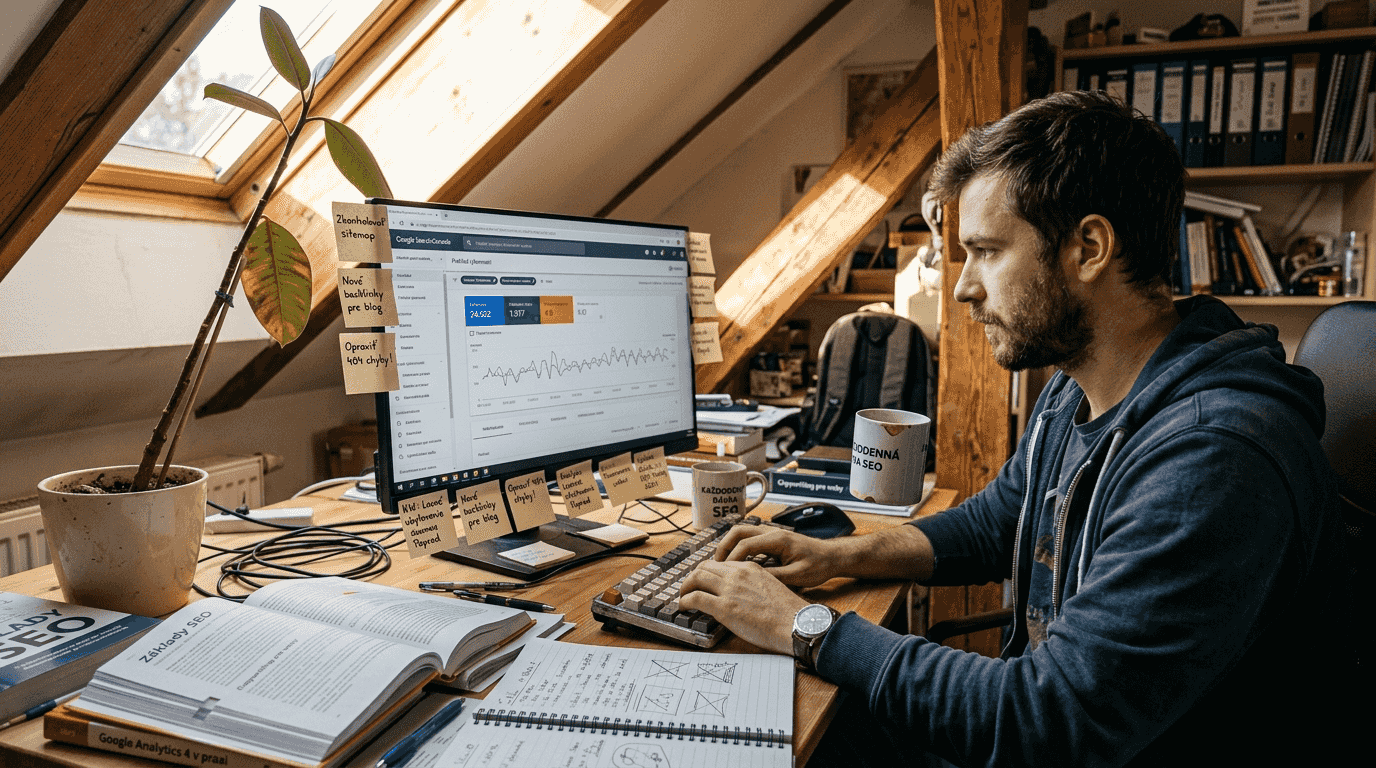
SEO (search engine optimization) is a way for a smaller business to compete with bigger ones without a huge ad budget. What matters is the quality of your content, the technical state of your website and whether you answer what people are searching for.
Why SEO pays off
- A steady flow of visitors – unlike ads, it doesn’t stop the moment you stop paying.
- Visitors with clear intent – people coming from search are actively looking for a solution, so they’re closer to buying.
- Trust – a business people find at the top of the results comes across as more trustworthy.
- Local visibility – for a local business, SEO and a Google Business Profile get you into Maps too.
What SEO is built on
- regular content that answers customers’ questions,
- a fast website that works well on mobile,
- links from relevant and trustworthy websites,
- keywords with a local focus,
- regularly tracking results in Google Search Console and Google Analytics.
SEO takes patience – results come gradually over a matter of months. But the reward is a channel that works even when you don’t. Read more in our article The role of SEO in digital strategies.
Tip: Start locally – fill out your Google Business Profile and regularly collect reviews from happy customers. People looking for services in their area are often ready to buy right away.
The benefits of social media in online promotion
Social media gives smaller businesses an affordable way to build relationships with customers and stay top of mind. It works best when it shows people, work and what goes on behind the scenes – not just ad flyers in digital form.
How to get the most out of it
- Pick the right platform – LinkedIn helps B2B businesses, Instagram suits visual brands and Facebook suits local businesses. Better one or two networks done properly than five done halfway.
- Deliver value – tips, answers to questions, project showcases and behind-the-scenes content work better than a constant “buy now”.
- Engage – reply to comments and messages. When people see there’s a human behind the business, they trust it more.
- Plan ahead – a content calendar helps you stay consistent even in busy weeks.
Mistakes that hold back growth
- posting without a strategy or plan,
- ignoring comments and messages,
- too much sales content instead of useful content,
- the wrong platform for your audience,
- poor-quality photos and visuals.
We cover specific Instagram mistakes in our article The most common mistakes on business Instagram.
Paid advertising and its return
Paid advertising brings instant visibility and precise control over who sees your offer. With Google Ads, you reach people who are searching for what you offer right now; with social media ads, you reach those who wouldn’t otherwise know about your offer.
Paid advertising vs. organic channels
- Speed: ads bring results right away, organic channels gradually over months.
- Costs: with ads, you pay on an ongoing basis; with organic channels, you mainly invest time and work.
- Targeting: ads allow precise targeting, while organic channels reach people based on what they search for or follow.
- Duration: ads stop when you stop paying, while SEO and content results last.
How to launch a paid campaign
- Set a goal – awareness, inquiries or direct sales.
- Describe your audience – who your customers are, where they are and what interests them.
- Prepare ad copy and visuals that solve their problem.
- Set a budget – our recommended budget calculator will help you estimate it.
- Set up conversion tracking so you can see the real return.
- Test multiple ad versions and scale up the ones that work.
- Review and adjust regularly.
Paid advertising works best together with your other channels. When someone sees your ad, comes to a clear website and also finds you on social media, their trust grows – and with it, the chance of a purchase.
Tip: Start with one campaign with a clear goal and a smaller budget. When it brings back more than it costs, gradually add more.
The benefits of email marketing
While an algorithm decides who sees your social media posts, your email list belongs to you. You can write to people who have subscribed at any time, and you don’t pay a platform for reach.
- Repeat purchases – you remind customers who already know and trust you that you’re there.
- Automation – welcome emails, abandoned cart reminders and post-purchase thank-yous run on their own.
- Direct contact – your message lands straight in the inbox, not in a crowded feed.
Getting started is simple: a sign-up form on your website, a short welcome message and one useful email a month.
How to get started: a plan for the first three months
- Month one: set up tracking on your website, fill out your Google Business Profile and get clear on your goal and target audience.
- Month two: launch one paid campaign with a smaller budget and start posting regularly on one social network.
- Month three: review what brought in inquiries or orders, scale it up and add another channel, such as email.
This way, you’ll gradually find out what works for your business, and you don’t have to spend your entire budget on experiments at once.
Frequently asked questions
How long does it take to see SEO results?
The first improvements usually show up within a few months of regular work. It depends on the competition, the state of your website and how often you add quality content.
Which social network is best for a small business?
The one where your customers are. LinkedIn usually helps B2B businesses, Instagram suits visual brands and Facebook suits local businesses. Start with one or two.
How much money do I need for paid advertising?
It depends on your industry, competition and goals. A smaller, well-targeted budget with tracking will bring more than a large sum without a strategy.
Can I handle online promotion myself, or do I need an agency?
You can handle social media posts or your Google Business Profile yourself. With SEO, paid ads and website design, an expert will save you time and the cost of mistakes, so you can focus on your business.
Get your business seen with Tronos
Online promotion works best when your website, SEO, social media and ads all pull in the same direction. That’s exactly what we do for small and midsize businesses – everything in one place, with a monthly report you actually understand. Check out our services.