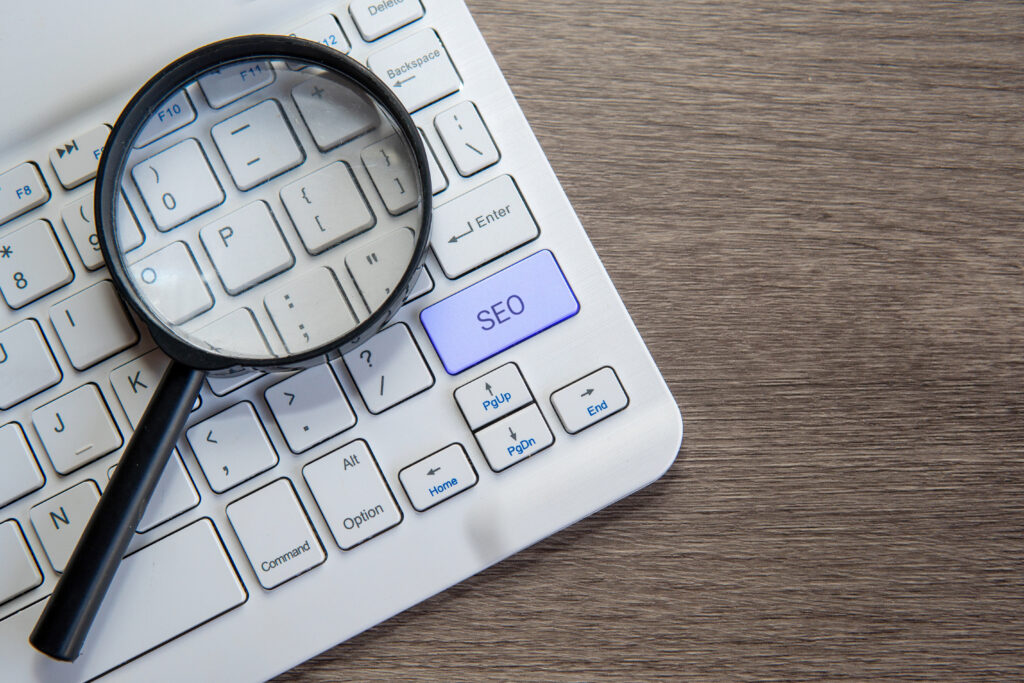
Ask an SEO specialist and they’ll tell you that paying for every click in Google Ads is throwing money away. Ask a PPC specialist and they’ll tell you that waiting six months for the first SEO results is suicide these days. The result of this never-ending battle? Companies often split their budgets and run two completely separate campaigns.
The truth is that SEO (search engine optimization) and PPC (paid advertising) aren’t competitors. They’re connected vessels. If you connect them the right way, you don’t just get the sum of their results. You get synergy, where 1 + 1 = 3. In this article, we’ll show you how ad data speeds up your SEO and how good SEO lowers your advertising costs.
The myth of separate worlds
A customer sitting at a computer searching for your product doesn’t care whether they click a paid link labeled “Sponsored” or the organic (unpaid) result below it. They just want to solve their problem.
If the person running ads at your company sits in a different office from the person creating content and they never talk, you’re losing a lot of money. These two people should share data every day. Why? Because what one of them discovers can save the other months of dead ends.
How PPC helps SEO: a dry run
SEO’s biggest drawback is time. When you write a new article or create a new category in your online store, it takes months to find out whether it works and whether that keyword actually drives sales.
This is where PPC steps in as your “research lab”:
- Uncover the real keywords: Run a Google Ads campaign for a week. In the search terms report, you’ll see exactly what people actually type into Google when they’re buying. Take those high-converting phrases and pass them to your SEO specialist to write an article around them. No more shooting in the dark.
- A/B test your headlines (titles): Not sure which SEO title (title tag) to give your page so people click it in Google? Test it with paid ads. Create 3 different ads. Use the one with the highest click-through rate (CTR) as the permanent title for your SEO.
How SEO makes PPC cheaper: Quality Score
Now let’s flip it. Many people think the highest bidder wins in Google Ads. Not true. Google uses a metric called Quality Score.
If your landing page doesn’t meet technical and content SEO standards, Google penalizes you. If your site is slow, the copy is irrelevant, or the structure is poor, Google makes your ads more expensive. You might pay EUR 1 per click, while a competitor with a top-notch SEO-optimized page pays just EUR 0.40 for the same keyword – and shows up above you.
Good SEO = cheaper paid ads. By optimizing your content for organic search, you automatically save budget in your PPC campaigns.
Dominating the first page
A common question from clients: “We’re number one organically for ‘leather sofas.’ Why should we also pay for ads on the same keyword?”
The answer: defending your territory and dominating it. If you’re first organically but don’t run ads on that keyword, your competitors will. The result? A competitor shows up above you (because ads sit at the very top) and steals some of your customers.
If you run ads and have strong SEO for the same keyword, you take up a huge amount of visual space on the customer’s screen (especially on mobile). You look like the absolute market leader, and the chance that the customer clicks on you (either the ad or the organic result) rises sharply.
Working together in the funnel (remarketing)
Customers rarely buy on their first visit. They need time to think it over. This is where the channels work together brilliantly:
- Step 1 (capture with SEO): A customer searches for information, e.g. “How to choose a heat pump.” They find your great, free SEO article on your blog. They read it and start to trust you, but they don’t buy yet. They leave the site.
- Step 2 (reminder with PPC): Your system remembers this visitor. The next day, you show them a remarketing (paid) ad on Facebook or Instagram: “Know how to choose a heat pump now? See our offer with installation within 14 days.”
SEO brought you cheap traffic at the early stage, and PPC turned that traffic into a paying customer. Separately, neither channel would have closed this sale.
Teamwork wins
The fight between SEO and PPC is an artificial problem. While PPC brings you instant revenue, data, and flexibility, SEO builds a long-term asset and authority and lowers your overall customer acquisition cost. The best companies on the market don’t do either-or. They do both.
Frequently asked questions (FAQ)
What should the budget split between PPC and SEO be?
For new websites and online stores, the usual recommendation is to invest roughly 70% of the budget in PPC (for immediate cash flow and data collection) and 30% in building SEO during the first 6 months. Once organic starts bearing steady fruit after 6 to 12 months, the split usually evens out to 50:50, or the PPC budget moves from search entirely to remarketing.
Do these two channels cannibalize each other? Am I paying for clicks I’d otherwise get for free?
Data from Google (and many independent studies) shows that when you have both an ad and an organic listing below it, total clicks grow more than if you had just one of them. Customers like clicking on brands they see more than once. If you turn off your ads, organic can’t replace 100% of the lost clicks – the competition will always grab some of them.
Can I use Keyword Planner for SEO even if I don’t pay for ads?
Google Ads Keyword Planner is a great SEO research tool, but if your account doesn’t have an active, paid campaign, Google won’t show you exact search volumes (only a broad range, e.g. 1,000 – 10,000). That’s exactly why it pays to run at least a small PPC campaign – it unlocks precise data for your SEO work.